Thank you Devlin for sharing LaMar Alexander with me!
He is very clear and he has cheap ebooks, which I am going to get today!

Thank you Devlin for sharing LaMar Alexander with me!
He is very clear and he has cheap ebooks, which I am going to get today!
I have a bumper crop of Mullein growing at Tiny House Ontario. Check to be sure that you are not allergic to it first like with any plant, but this is a GREAT toilet paper replacement if you get caught in a pinch. I am going to dry some of it this year too.
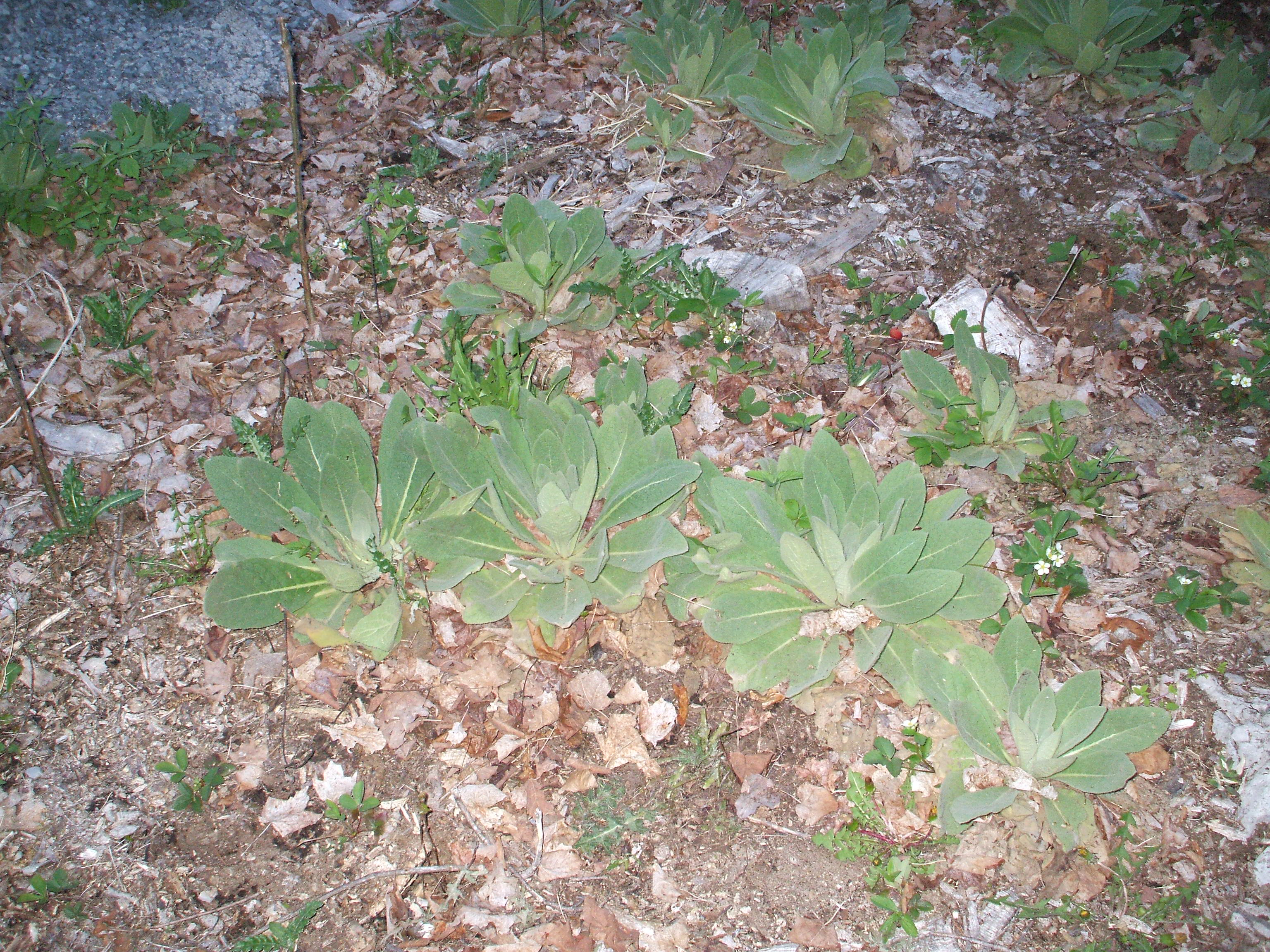
I have not tried any of these things and thus do not suggest that you be my guinea pig. I understand that Mullein Leaf has served many purposes over the past few centuries, from making candlewicks to casting out evil spirits. However, as an herbal treatment, Verbascum thapsus was primarily used as a cure for diarrhea, respiratory diseases and hemorrhoids. The leaves and flowers of the Mullein Leaf are classified in traditional herbal literature as expectorants and demulcents.
Mullein Leaf or scientifically referred to as Verbascum Thapsus is a wildflower native to much of Europe and Asia which can grow almost anywhere. Because of its thick, soft leaves, it is also called Grandmother’s Flannel and Our Lady’s Flannel. The word Mullein is said to be derived from the Middle English word for “soft” which is moleyne.
Traditionally, Mullein Leaf has been used by medicinal herbalists to aid with problems of the respiratory tract, such as cases of irritating coughs with bronchial congestion. Some herbal treatments extend the therapeutic use to pneumonia and asthma.
As far as natural herbs go, the Mullein Leaf is purported to reduce inflammation of the trachea along with soothes irritated tissues. Due to its high mucilage content, Organic Mullein Leaf is also recommended for topical applications by herbalists as a soothing emollient for inflammatory skin conditions and burns. Externally, an extract of these herbs made in olive oil is used for soothing and easing ear problems.
Mullein Leaf is also thought by some herbalists to provide constipation relief, help with sleeplessness, care for the kidneys and help with nervous tension.
The Mullein has very markedly demulcent, emollient and astringent properties, which render it useful in pectoral complaints and bleeding of the lungs and bowels. Slightly sedative and narcotic properties.
Demulcent, emollient, astringent and sedative.
Yes, this is what I call the newest member of our pack. The sweet and loveable but busy Rudigrrrr Wolf gets called the Bad Little Wolf because he is always in havoc. If I did not know better I would swear that he is a fetal alcohol dog. I am also not sure if dogs can have ADHD, but at about two years of age he acts like a 4 month old pup, who requires little sleep.
Over the weekend my oldest and very, very dear childhood friend was over and the Bad Little Wolf untied his shoe laces at least a dozen times while he sat with us. Did I mention that too Rudigrrr seems to suffer from Pica? He eats anything that is on the ground – and this includes rocks. I am not sure if you have ever heard the sound of teeth chewing rocks (Yes, they must be chewed before they are swallowed!)? It is not wonderful. Always hilarious, my Kev suggested that our 4 pound Rudigrrr might be eating rocks so he does not blow away in the wind. BAHAHAHA!
Anyway, when the Bad Little Wolf was not squeaking and squealing, or untying Kev’s shoes he was jumping up on us and the other dogs and also eating rocks… Poor Kev! I hope he will come back!
I can’t tell you I was surprised when the dogs came in from from their business and the stinky one turned out to be the Bad Little Wolf. Turns out that he was eating leeks. It also turns out that leeks smell just as bad on dog breath as they do on people breath. I don’t know if these are poison to dogs like the domesticated onion and leek are, but he did not get sick, he just grossed us out with his kisses and nose biting behaviour. Still I pulled the remaining leeks out of the fenced area, just to be safe.
I have to agree with Rudigrrr; wild leeks are tempting and because they are yummy. My favourite way to eat them is plain out of the ground with salt and butter on bread. In soups, pickled and cooked in with other foods works too, just like with green onions, you eat the whole thing.
I have always told people that they should not mistake them for a trout lily because these are poison but I guess the jury is out on this. I have included a photo of these too. Leeks are bright green and they are very small compared to the grocery store varieties. One eats the leaves on them which are soft and flavourful. The lily leaves are darker and spotted too. I would not eat them because I was taught not to do so, but the website that I have linked to claims that the roots taste like cucumbers.
TIP: If you are going to try some leeks: brushing your teeth with baking soda will absorb and eliminate the smell. I do not know if this works for Bad Little Wolves though.



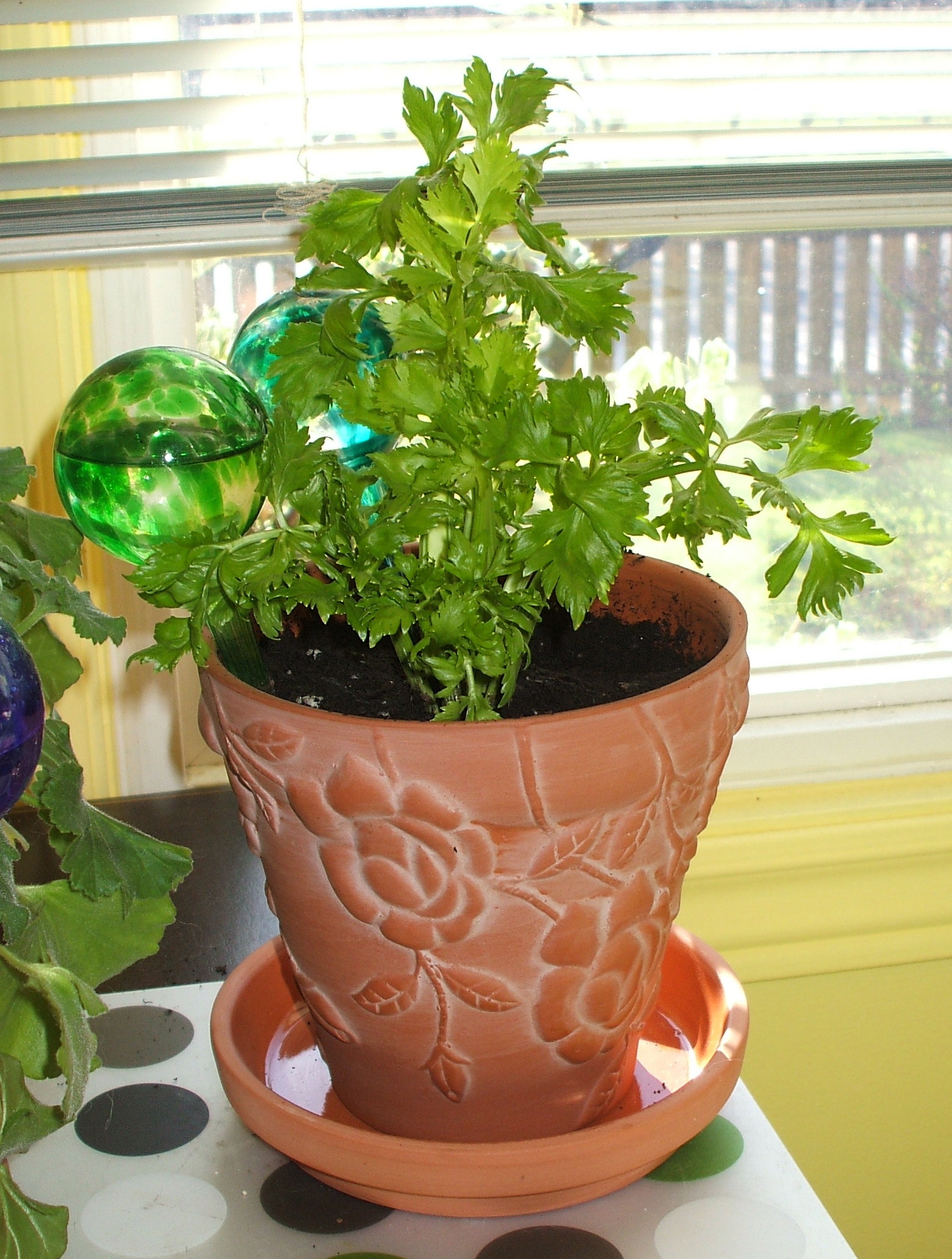
A while ago the folks and Frugally Sustainable mentioned that they were regrowing celery. WHAT?
Anyway… It is easy and it works. I have not clipped and used any yet but I will be toting it with me to Tiny House Ontario so that when it is a little bigger I can eat some of this lovely plant, and also because my husband is a plant killer. Just cut one or two off from the outside and let it keep on growing. I wonder how long it will last?
Introducing Ms. Celery. (She uses pot!)
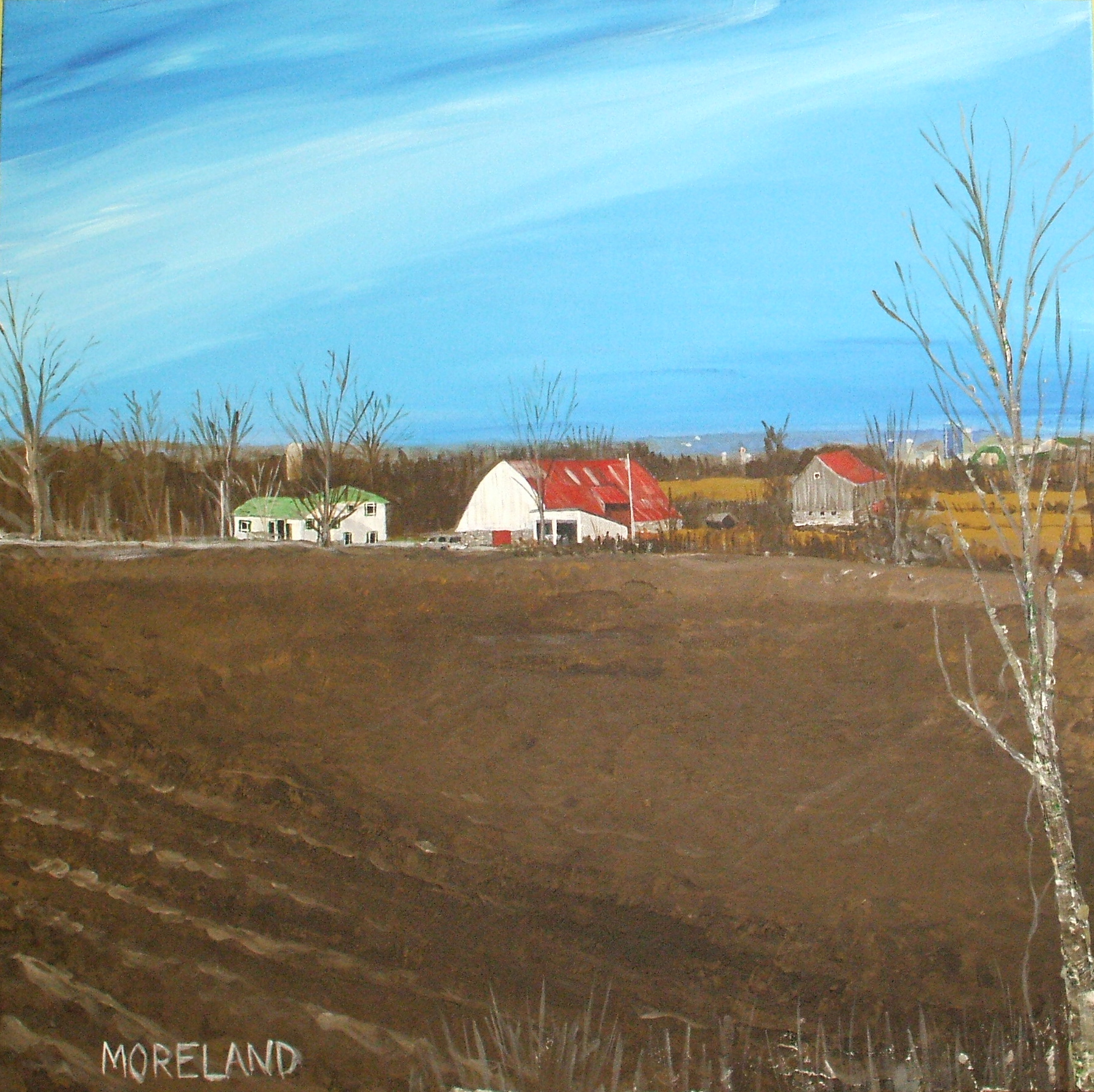
This painting is of a place that is very special to me. It belongs to people who I love, very much. It is 24×24 – SOLD
 Tiny House Ontario