Nature

Wolfe Island’s Wind

Wolfe Island Wind farm is a an omnipresent part of life for some people on the island, but for other’s it is simply a part of the landscape.  Do you think it is an environmental move forward, or a mass of metal that pollutes with sound and size?  So many quixotically charged these giants before they were there and others invited them into their hearts.

Love them or hate them, the wind farm is now a part of the everyday visual intake of those who live on and around the island.  Looking South from Kingston these giants are pretty hard to miss.

Painting 8×10 acrylic of Ian MacAlpine’s photo.

Categories: Art, Environmentalism, Laura Moreland, Nature, Off Grid, Ontario, Original Art work of Laura Moreland, Sustainable living, Wind Farm, Windmill painting, Wolfe Island | 2 Comments

Escarpment lookout potential

Wikipedia says: An escarpment is a steep slope or long cliff that occurs from erosion or faulting and separates two relatively level areas of differing elevations.

The land under Tiny House Ontario is on a limestone fault, at a quite high elevation when compared to the surrounding land.  There are a lot of rock piles here too.

The closest city to us, is Kingston, Ontario, Canada.  Kingston sits at about 25 feet above sea level, whereas Tiny House Ontario, which is within 30 Km of Kingston sits at about 200 feet above sea level.  The difference in height is not so great; the approximate height of a 20 story building, and the gradient upward is not a sheer drop.  As a matter of fact probably about half of the height is covered in the distance before you arrive at the escarpment, and it is somewhat hilly too, so unless you are on a bicycle or on foot, you would probably not know that you are going up hill.

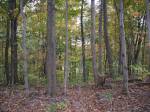
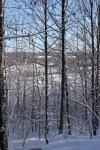
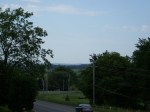
Along the same escarpment where the road goes though, they have the same elevation as me and because the road is through, you can see Kingston’s water tower, radio towers and also lots of the windmills on Wolfe Island.  I have included here some images from two different seasons near the edge of the escarpment on my land and one where the road is open so you can see the height and view.

My cousin Kenny, who knows this land, says that I should remove a few of the softwood trees so that the hard ones will grow larger with the light and I will have a better view.  What would you do?  Cut a few trees so that you would get a better view and more light?  Let it stay the way that it grows naturally?

**Please note that I changed the title of this post from view to lookout because Tiny House Ontario sits far away from the ridge, so any potential for seeing into the distance would be purely as a place to walk to, and lookout from.  At Tiny House Ontario, you can see only inside the forest.**

Categories: Forest, Nature, Off Grid, Ontario, Open your eyes, Tiny house, Tiny House Ontario, View | 4 Comments

The Trouble with Driveways

The forest where Tiny House Ontario sits, has had very little human intervention.  I had a few trees go missing on the South East ridge in 2010 (a former neighbour cut them down, to burn for fire wood; they were not his to take).  This was all the damage done to the land when I considered my Tiny House build.

I would like to live there but I also do not want to harm the forest.  I did not want to cut any trees at all, but reasonably, I needed to have a route in.  An entry just makes life so much easier, not just for my own purposes of living, but for the cement delivery, lumber delivery and so on, I required a road.

I did not go about this all helter-skelter and without a good deal of forethought.  In order to put in my driveway I chose the point of least damage through; I made a lot of effort to keep from taking any trees over 3 inches in diameter, and I also did not want to cut a single shag bark hickory.  These hickory trees are rare and protected so it is not only illegal to cut them, it is unethical.  I managed to keep every hickory, but there were a few maples that had to go, so I could have an entry point.  My friends John and Leo cleared the lane all the way back to the ridge, but got four pick up trucks of firewood from a 600 foot long and 8 foot wide lane way, which is a very small and reasonable loss.  They did not clear cut, certainly, but did cut a swath out of the woods.   About half the wood they got came from a large dead maple which wanted for reuse, and thus put the driveway right over it’s old trunk.  Aside from the large dead one, I believe that there were about 20 trees that were larger than 3 inches were cut, but only two were larger than 8 inches.

There were no trees cut down in order to make space for Tiny House Ontario.  A spot was chosen where there was a natural clearing.

It was not just trees and that had to go.  As I mentioned in an earlier post, a lot of what was removed to get through was a swipe through the “prickly pear” (which I think is a sort of a fruitless rubus cane).  There were also a lot of small saplings and trees that were less than 3 inches in diameter, these were sacrificed.  I also covered a lot of leeks, wild lilies, mayflowers, a few trilliums, and a small patch of wild ginseng too.  What I mean is that you cannot buy land which has a low yielding potential for farming, to build on and expect that you will not damage any of the natural features in the process.  It is a pity but it had to be done, if I am to actually enjoy the use of this land.

A nice side effect of the little bit of clearing, is that the new openings will allow two more benefits for me.  Both are because now there is light coming in.  I will be able to add a vegetable garden and solar panels.

While I did my best to be as conscientious as possible, I absolutely caused damage to the forest.   Here is what I did to get it in step by step, with a small slide show for you to see the process.

  • I picked the route of least resistance.
  • I made a path with some bright yellow string.
  • Permit was applied for and attained.
  • John and Leo came in and cut everything within 10 feet of the line (except one hickory which is 8 feet in and makes a narrow spot in the driveway).  The photo of me with my chainsaw is taken on a former property when I lost a half dozen huge cedars to a flood.
  • Myself, and my husband cleared the “prickly pear”.
  • Myself, and a few lads cleaned the sticks up with a chipper.
  • The planned driveway and tiny house location were clear to take some (minimal excavation and) gravel.
  • The gravel was brought in load, by load, and flattened by my cousin Kenny’s tractor and accessories.
  • Tiny House Ontario hole was dug and filled with stone, cement was brought in and laid and then it was built.
  • Several final loads of gravel were brought in right up to the Tiny House that I tamped down.
  • The culvert was installed by the road, but not accepted by the county (twice so far), so I do not have an entry permit as of yet.

This slideshow requires JavaScript.

Categories: Building code, Environmentalism, Forest, Nature, Off Grid, Simple living, Tiny House Ontario | 2 Comments

Through The Thicket

The first time I went to look at the land was before I purchased it.  It was a cold fall day, and was pissing rain.  Not to be dissuaded, I went through the brush and found that about half way in there was a wall of thicket, of what the locals call prickly pear. The great barrier of it went on as far as I could see to the left and right of me; I wanted to get through to see what was on the other side.   Tenaciously, I pulled my coat sleeves over my hands, and began to push my way in through the canes and their sharp little thorns.

They tied themselves to me, through my clothes and into my skin.  I was the soft side of velcro and still I pushed my way though.  What was about 200 foot wide band of the stuff felt more like a mile.  My cousin Ernie says that this Great Wall has been there forever, that he would hunt rabbits there as a kid, and with great success.  Truthfully, there are still grouse, partridge and rabbits by the plenty in these thickets; since then, I have cleared a small path through, so that I can walk back to the ridge without the pain of being caught in bramble.

When I finally arrived to the other side, I was thrilled that I persevered.  It was just as I thought.  The woods opened up and I found it just the way I expected to.  The back 7 acres is all Carolinian forest, hardwood trees as high as the ridge itself.  It opens up and is as beautiful as can be back there.

I can’t help but reflect on that adventure and how it strangely mirrors life.  It is not just in nature that you have to push through a lot of difficulty, sometimes getting poked by the ugliness of life until you bleed.  The fact is that a lot of life is similar to being caught in a giant rose bush, you just have to escape it to get to the great stuff.  Generally, I think that those who go through the biggest prickly patches, are very often the people who have the most to offer; they are the hardest workers the ones who know how to live.

I bought the land, and then not long after I built Tiny House Ontario.  I located it right before the thicket at the place where I stood wondering if I could get through a few months before.  I did this not just because I want to preserve the sanctity of that wonderful deep woods, but because I wanted to face the obstacle in that land.   There are great rewards in this location, mostly the constant movement of animals around me, who I hear much more often than I see.  I am surrounded by life, by those who are amazingly well sustained by the difficult landscape.

On my most recent winter visit, I was out walking with Liisa.  We were nearly at Tiny House Ontario, perhaps 50 feet away.  She noticed this, not me and stopped to take this image.  It captures the density of the prickly pear.  You know, when the leaves come in and you stand right here in my little woman made clearing, you cannot see the Tiny House at all.

Mostly though, I chose this spot, because all year around the prickly pear stands, and reminds me that I can get through the rough patches.  I know that I can survive even the deepest injury and I can live with the scars too.  Survival is often tough but the great openings at the end of the rough patches, make the trip worth while.

Categories: Nature, Off Grid, Ontario, Open your eyes, Simple living, Tiny house, Tiny House Ontario, Winter, World | 2 Comments